
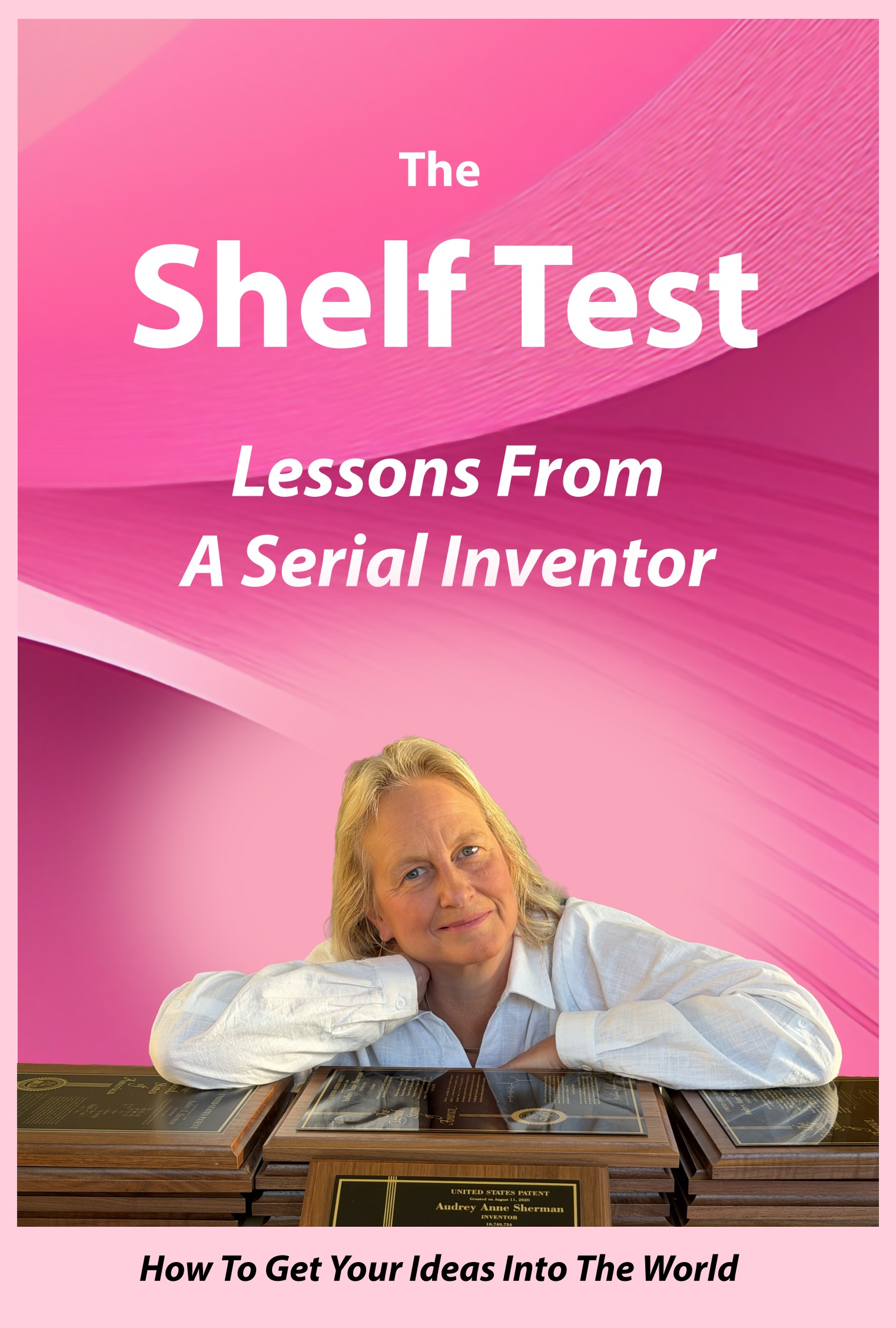
You have an idea that could make something better. Perhaps you have already proved it works. So why is it still waiting on the shelf?
The Shelf Test explores seven gates that can stand between a useful idea and its adoption. Through stories drawn from chemist and inventor Audrey Sherman’s career at 3M, you’ll see how inventions moved forward, why others stalled, and how people found openings in seemingly immovable obstacles.
Who Should Read it:
- Anyone who has thought, “There has to be a better way,” and had an idea for one
- Inventors whose promising work is still waiting for support
- Engineers and researchers who built something that works but cannot get it used
- Product managers whose ideas keep getting stuck in approval chains
- Anyone wondering whether to keep working on an idea, change direction, or try again later
What you’ll Learn:
You’ll learn to recognize seven gates that block most invensions. Each gives you a different set of questions to ask. Who controls the next decision? What do people fear losing? What happens when funding ends or the work changes hands?
Alongside each story are practical strategies and Shelf Test questions you can apply to your own idea. They help you identify what is holding it back and choose a useful next step—whether that means finding an ally, designing a convincing trial, securing support, or waiting for conditions to change.
For teachers or a self-learners
Every chapter ends the same way: How to get through the obstacles and key take away questions. Here is the end of Chapter 3, The Sticky Log.
How to Get Through
Keep the risk in view between incidents
If the pain comes and goes, ask what remains when the immediate trouble has passed. Has the cause been removed, or is it still there, waiting to cause trouble again?
Give people an early result they can assess
What could someone see when your invention begins working? Start there. You may understand the chemistry or the software perfectly. The person deciding whether to keep using it needs something they can assess too.
Where will they see it working?
Then consider where that evidence will appear. Her team put the release coating on the film before it reached the tape factory. The factory received the improvement in an input it already used. Nobody had to add a coating operation to obtain it, and nobody needed a microscope to judge the result. The evidence appeared when they unwound the tape.
Key Takeaways
Use these questions to examine your own invention.
- What remains when the immediate pain goes away? Identify the continuing risk and the people whose work keeps it in view.
- What useful result can people see early? Describe what they could observe, when it would appear, and how it connects to the benefit they are waiting for.
- Where will they see it working? Look for evidence in the work they already do. The tape factory saw the improvement in the way its rolls unwound.
Do you have an innovation you would like to run through the Shelf Test to find what may be blocking it? There is a complete prompt you can use in your favorite AI tool in the Appendix of the book!
EXCERPT FROM CHAPTER 3
The Sticky Log
Picture a tape factory running at full speed. Giant machines hum like engines on a runway, pulling wide sheets of unfinished tape through rollers, ovens, and winding stations. From the outside, duct tape looks simple: plastic film on top, woven cloth in the middle, and thick rubber adhesive underneath. But inside the factory, everyone knew the quiet danger hiding in every roll: tape was only useful if it could be unwound again.
The trouble had a deceptively ordinary name: blocking. It happened when the sticky underside of one tape layer pressed too hard against the plastic backside of the layer beneath it. At first, nothing looked wrong. The roll sat there quietly. But with enough pressure, heat, and time, the layers stopped acting like tape and began acting like one solid object.
A master roll, wound tightly under thousands of pounds of tension, could become a factory-sized problem. The adhesive did not merely touch the plastic backing; it grabbed on, clung tight, and refused to let go.
Then came the real trouble. The roll became a giant sticky log. A high-speed slicer that should have cut cleanly through tape suddenly faced a stubborn block of plastic and rubber. Belts strained. Gears fought back. Motors overheated. And if anyone tried to pull the layers apart by hand, the adhesive tore away from its own cloth reinforcement. The product was ruined before it ever reached a store shelf. The mystery was clear: how could tape be made strong enough to stick, yet calm enough to let go?
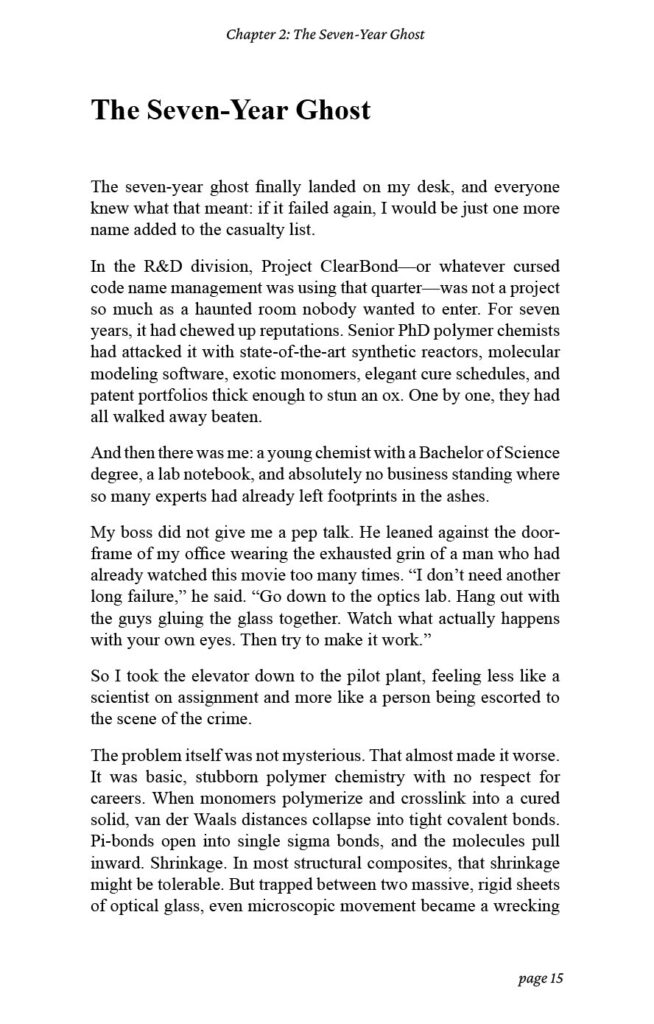
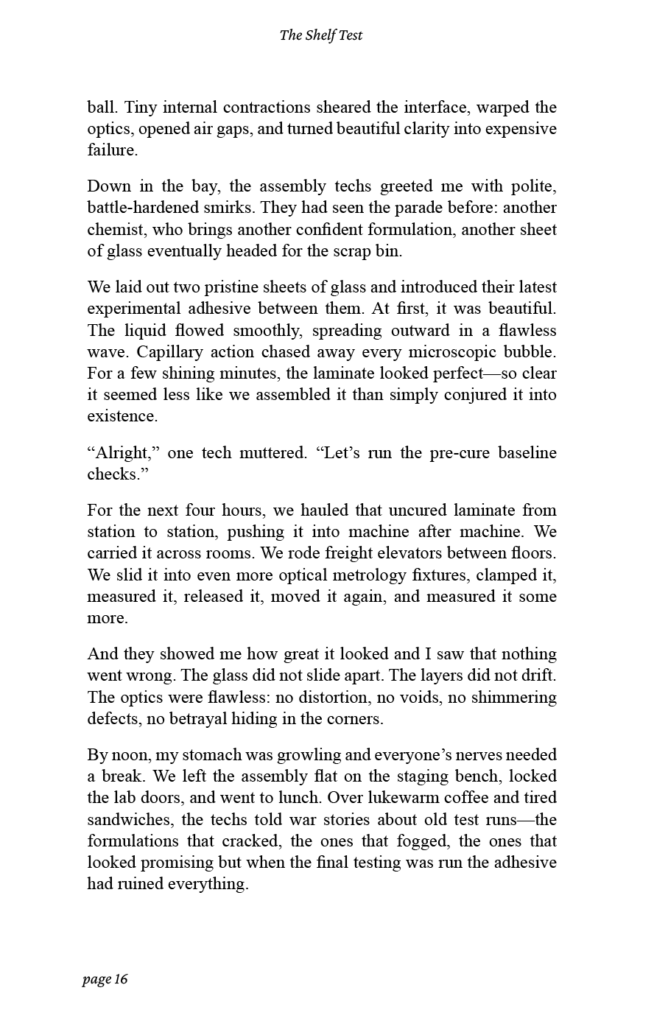
Look Inside the Book
Reader Insights and Praise
Discover heartfelt reviews from readers who have transformed their thoughts on how to be successful with their own projects after reading The Shelf Test.

You do not often get these firsthand stories from inside of production from such a successful inventor. And the Shelf Test insights are a great bonus.
I know someone that was at one of the factories. This is real! They said they learned a lot from seeing the author in action.