
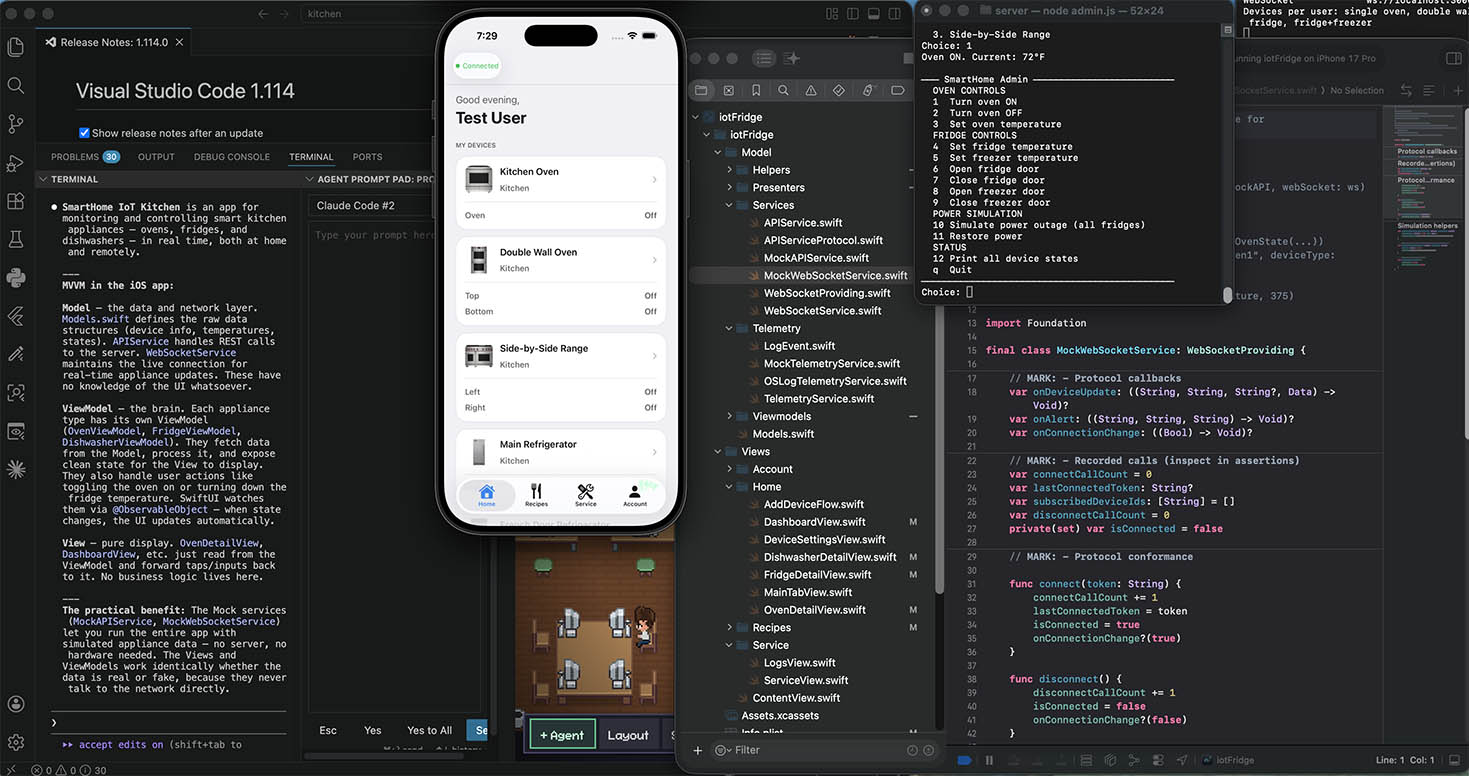
It’s never been easier to build an iOS app. It is still just as hard though, to answer the “Will it scale and be maintainable?” question.
With modern tooling—including Apple Intelligence and coding agents—you can go from idea to working features faster than ever. You can build views, wire up APIs, and run something functional in a fraction of the time it used to take. But speed should not downplay structure.
When code is generated quickly, it’s easy for responsibilities to blur. Logic drifts into views. Networking gets scattered. State becomes harder to reason about. And over time, even small changes start to feel risky.
This isn’t a limitation newly caused by AI tools—it’s a reflection of the architecture underneath your code base. The better your structure, the more leverage all your tools give you. The worse your structure, the faster things degrade.
This series of articles/lessons focus on that foundation. We will find these architecture decisions that will make our apps easier to maintain and scale.
Across ten lessons, we’ll see how a real-world smart kitchen app is organized—from architecture and state management to networking, testing, and device pairing. Each article is grounded in actual code and follows a simple pattern:
- What — the concept or pattern
- So What — why it matters in real apps
- Now What — how it’s implemented in practice
We’ll focus on the areas that determine whether an app holds up over time:
- Clear separation of responsibilities
- Loose coupling between components
- Predictable data flow
- Testable business logic
- The ability to add features without rewriting everything
The goal isn’t just to explain patterns—it’s to show how they work together to create a system we can trust, extend, and move quickly within.
We’ll start with a foundation: why your views shouldn’t do everything, and how MVVM creates a structure that makes everything else possible.
- App Architecture — Why Your Views Shouldn’t Do Everything
Leave a Reply
You must be logged in to post a comment.